
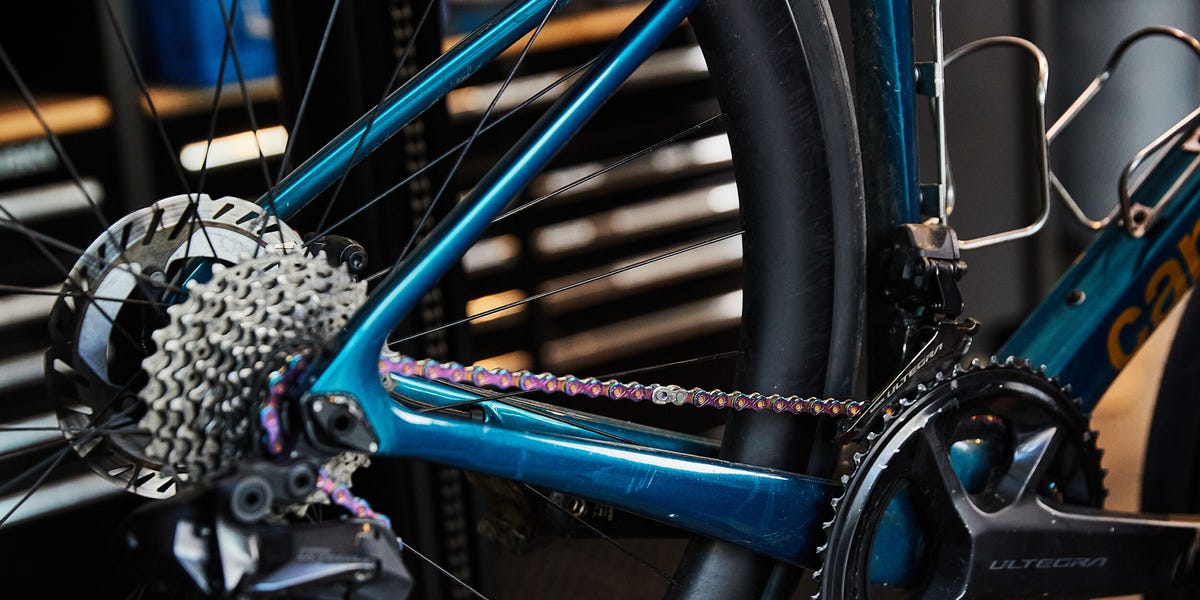
Waxing bike chains is still relatively new to many riders, but it promises a cleaner drivetrain, less mess, and potentially longer-lasting components. When it was time to replace the chain on my road bike over a year ago , I decided to commit and give chain waxing an honest long-term try. The biggest appeal to me was reduced maintenance, with any performance gains secondary. For a full deep dive into how chain lube choice affects drivetrain wear and long-term costs, read Bicycling’s story on choosing the right chain lube.
Over the course of testing it myself, I came to understand why chain waxing has developed such a devoted following: it can keep your bike and everything it touches cleaner, simplify day-to-day upkeep, and actually extend the life of your drivetrain. These are five things I learned over the past year—or 7,000 miles—of chain waxing that not everyone talks about. Stock Up on Quicklinks
If you’re following the manufacturer’s instructions, both Shimano and SRAM quicklinks are single-use products. Meaning every time you immerse wax your chain, you’ll need to have a link prepared, since that involves removing the chain from your bike completely. SRAM PowerLock Link for 12 Speed Chains is listed at $22 for a 4 pack.
More From Bicycling
Video poster
Just doing some simple math shows that it can add up. An alternative is a reusable quicklink from a brand like Wippermann’s Connex Chain Link. These install differently from the PowerLock friction “snap” and are claimed to last the life of your chain. Even With Shoddy Care, They Last
I’ll be honest: my chain maintenance intervals are far from perfect. I perform a full wax immersion every two months or so, and apply drip wax in between when I notice an increase in noise. Even with a time commitment as small as a few minutes over a few months, my chain continues to perform.
By that, I mean it still runs quietly, shifts smoothly, and—most importantly—hasn’t shown meaningful elongation wear. That matters because chain wear doesn’t just affect the chain itself; once a chain stretches past a certain point, it can accelerate wear on the cassette and chainrings too.
Advertisement - Continue Reading Below
One of the biggest surprises of waxing was realizing that even an imperfect routine can still deliver real benefits. You do not have to maintain a lab-grade schedule to get cleaner performance and better drivetrain longevity than many riders get with inconsistent wet-lube upkeep.
Bike maintenance with a focus on cleaning the chain and rear components. trevor raab
Signs of a dirty chain, which wet lubes can contribute to. Everyday Cleanliness
If a wet lube chain comes into contact with kids, pets, the back seat of your car, clothing, or your bare calf, it’ll leave a mark. Since waxing is a dry lube that simply doesn’t accumulate that kind of sticky black gunk, those concerns are gone. Maintenance, repairs, and storage at home are now a much cleaner affair.
It’s one of those small quality-of-life changes you don’t fully appreciate until the annoyance is gone. You’re not constantly dealing with the usual pile of filthy rags or paper towels covered in black streaks after running the chain through them postride. It may seem like a small detail, but not churning through dirty rags and stocking up on degreaser is a huge upgrade on its own. The Other Type of Wear
One benefit of chain wax is that it can reduce the wear that happens inside a chain during use (sometimes called chain stretch). Checking chain wear is paramount to saving other parts of your drivetrain from premature wear.
But there’s another way that chains wear out: laterally. This is the side-to-side wear that can impact the shifting performance. This is particularly important in 1x systems where the chain moves up and down the cassette at more extreme angles.
There aren’t many lateral chain wear tools on the market, but the Abbey LL Chain Wear Tool is a solid chunk of aluminum and measures both lateral and linear wear accurately. After 7,000 miles, not only did waxing my chain limit chain stretch, I also had very limited lateral wear. The Investment is Less Than You Think
Immersion waxing has a reputation for being complicated and time-consuming. With the right tools and a smart setup, it can be faster and simpler than a wet lube routine.
My colleague Dan Chabanov, who’s been a long-time wax convert, gave me his own perspective on why he favors it over wet lube:
“It might sound counterintuitive, but switching to full-immersion wax chain lube makes me rarely think about my chain. Yes, the upfront work is a little involved. If the initial cleaning of a chain feels too daunting (or if pressed for time), Silca and Ceramic Speed sell pre-waxed chains. Now, when it’s time to renew the wax on my chain, all I do is undo the quick link and throw it in a crockpot for half an hour or so (while I go do other things). Factor in reinstalling the chain back on my bike, and the whole process takes maybe two minutes of my active attention.
“My waxed road bike chain has over 5,000 miles on it and shows virtually no wear. And I have not needed chemical degreasers to clean my drivetrain. I occasionally wipe off some flaked wax, and a full clean can now be done with just hot water.
“I used to spend roughly twenty minutes every week cleaning my drivetrain before switching to wax. Much more if it’s been raining. That’s 17 hours (or more) per year I won’t spend trying to get my chain clean. And as a new dad, that time is priceless, he said”
The other investment, financial, is also less than you may think. You can go with a full kit from Silca to make life easy, or buy the ingredients à la carte for less. A crockpot at the thrift store will run you around $10. A bag of Silca’s Chain Wax will set you back $40, but it has lasted me nearly 1.5 years of riding multiple bikes, all with waxed drivetrains.
I wish it had disc brakes, but I am fond of it otherwise.
I am guessing since the chain you linked is a 7 speed, these 7 speed quick links will work. https://kmcchain.us/collections/7-speed-under-missing-link
Yeah, I feel the same way about my bike lol.
Yep, those links should work no problem. I also have a 3x7 on my bike and this is what I use.
Made it to the bike clinic, got my chain oiled, I know counter to the point of this thread. But my tools will be here early next week and I will give the waxing a try. Until then, an oiled chain will keep me riding.
Next I need to fix my rear brakes.
If you use the same chain, be sure to thoroughly degrease it before waxing. They sell pre-waxed chains too, but I’m not sure of brands off hand. You’ll also want to completely clean off your drive train.
What’s wrong with your rear brakes? Good thing you found that bike clinic!
The pads rub on my rim after using them. We adjusted them so they would not, but then on the ride home I realized that now the cable is too loose and comes out of the adjustment knob at the handle. So several times while trying to stop my rear brakes were not working. The front brakes worked great, but also rub after use.
I have a chain cleaner arriving today, with my chain checker. So I will get the chain all cleaned up along with my cassette and front cogs before I try waxing.
Just as a general piece of advice: The ParkTools YouTube channel has tons of great maintenance and adjustment videos.
The chain cleaner is good for cleaning it up between oilings, but you want to be super thorough in degreasing before waxing. I’d recommend checking out some tutorials before you wax.
Thanks, will do.