

It’s nothing to do with fear, it’s down to cost, practicality, experience and security.
The one thing these people are not afraid of is change. Every senior management resource within every medium to large business wants to implement change.


It’s nothing to do with fear, it’s down to cost, practicality, experience and security.
The one thing these people are not afraid of is change. Every senior management resource within every medium to large business wants to implement change.


And pay the additional licence? Why?


As a data consultant, I would say those companies already do question the process, and have done for decades.
Yes there are countless situations where a dedicated system or database could and should replace Excel, but there are just as many scenarios where Excel is ideal, and swapping out a spreadsheet for what would be potentially tens of separate applications across the business, or one absurdly expensive behemoth, to perform tasks that could be done rapidly and clearly in Excel is neither practical nor economically viable for most companies. A spreadsheet is perfect for plenty of situations.
My job is literally to help these companies move to appropriate database solutions, often transitioning away from Excel. But there’s no getting around that a spreadsheet solves (often simple) problems that are impractical with other tools. You can move a company to a supplier’s sector-specific solution and solve huge numbers of issues, but unless that solution exactly meets every aspect of the business requirements, there’s always going to be a fallback and it’s often Excel, for better or worse.


I can only assume anyone still asking the question “is Excel really that much better than the alternatives?” lacks exposure to Power Query and its prevalence in business.
The best place for people with no knowledge of the fediverse to learn about it, is on the platforms they use now.


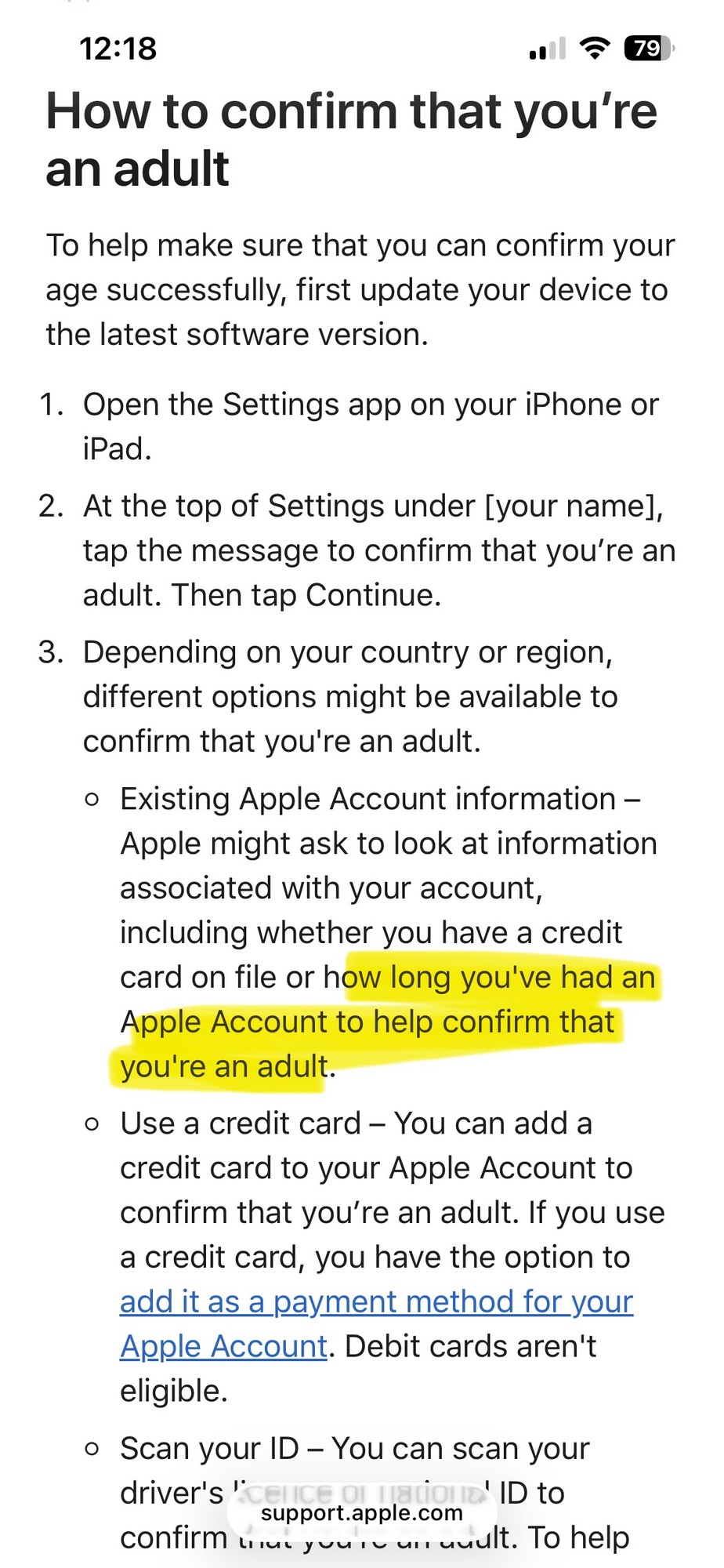
Well they do, but the actual reason given on the subsequent screen was down to when my Apple ID was set up.
Looks like they do it either way.


I installed this last night and was presented with a warning screen saying that I’d have to provide ID, then the following screen basically said “Nah, you’re good bro, we don’t need your ID”.
I’m hoping that was as a result of my Apple ID having been set up many years ago, rather than them having seen my camera roll and concluded that this guy is clearly old as fuck.


If you’ve got a VPN, just install that on your Apple TV. Google doesn’t show ads in certain countries (the list is Googleable). That was an absolute game changer for me.


I use an Apple TV, but I assume it’s the same as any other streaming box or appropriate smart TV.
The absolute piece-of-piss way to block all YouTube ads on it is to install a VPN like Proton, choose a relevant country (easily googleable), and there will be no ads whatsoever in YouTube.
Google doesn’t serve ads on YouTube in a handful of countries.


The technical implementation, or the law itself?


Not a single word in this rant has any relevance to my comment.


Mixed feelings about this.
However, ethical questions aside, and from a purely legal conformation standpoint, if the phone validates the user is over 18 and passes only that info as a token to whatever application or website requests it, then it’s a good implementation. It means elimination of multiple validation requirements, minimal transfer of data to third parties, fewer sources holding personal data, etc. Whether it works that way remains to be seen.
Absolutely wild brand activation tactics from the Linux marketing team.